You Deserve Nothing
A New York Times Bestseller
An IndieBound Bestseller
Set in Paris, at an international high school catering to the sons and daughters of wealthy, influential families, You Deserve Nothing is a gripping story of power, idealism, and morality. In Maksik’s stylish prose, Paris is sensual, dazzling and dangerously seductive. It serves as a fitting backdrop for a dramatic tale about the tension between desire and action, and about the complex relationship that exists between our public and private selves.
Praise for You Deserve Nothing
“A novel rivetingly plotted and beautifully written. . . [Maksik] writes about the moral ambiguity of Will’s circumstances with dazzling clarity and impressive philosophical rigor.”
—New York Times
“Marvelous . . . provocative . . . suspenseful.”
—Chicago Tribune, Editors’ Choice
“Maksik, in his account of adolescent yearning and grown-up fallibility, does something like what Hemingway did in his non-debut memoir, “A Moveable Feast” – he vividly evokes a destination for generations of foreign seekers.”
—San Francisco Chronicle
“While comparisons with Donna Tartt and J D Salinger are apt given the high school setting and philosophical digressions, it’s Ian McEwan who comes most readily to mind. Maksik’s Paris is brilliantly sketched and demythologized. You Deserve Nothing arrives with a fanfare of acclaim. Alexander Maksik proves himself a worthy recipient of this attention.”
—Times Literary Supplement
“A suberb debut novel.”
—Sunday Times
“With writing that is reminiscent of James Salter’s in its sensuality, Francine Prose’s capacious inquiry into difficult moral questions and Martin Amis’s loose-limbed evocation of the perils of youth, Maksik brings us back to that point in all our lives when character is molten, integrity elusive and beauty unbearably thrilling.”
—Christian Science Monitor
“Largely a character study of Will Silver, master teacher at the International School of France in Paris, the novel advances its narrative through multiple perspectives, much as Faulkner does in As I Lay Dying . . . Both intelligent and intellectual, [You Deserve Nothing] is both a tribute to brilliant teachers and a cautionary tale of their imperfections.”
—Kirkus Reviews (starred review)
“One of the most engaged reads I’ve had in years.”
—Alice Sebold
Alexander Maksik deftly evokes the beauty and pathos of Paris, and the story of Will, Gilad and Marie-each compelled towards moral and sexual awakening- is at once dark and luminous. This is a book to be read all at once with a glass of wine in a café or a cup of tea while tucked safely in bed”
—A.M. Homes,
“You Deserve Nothing is a powerful, absorbing novel and Alexander Maksik is an unusually gifted writer.”
—Tom Perrotta

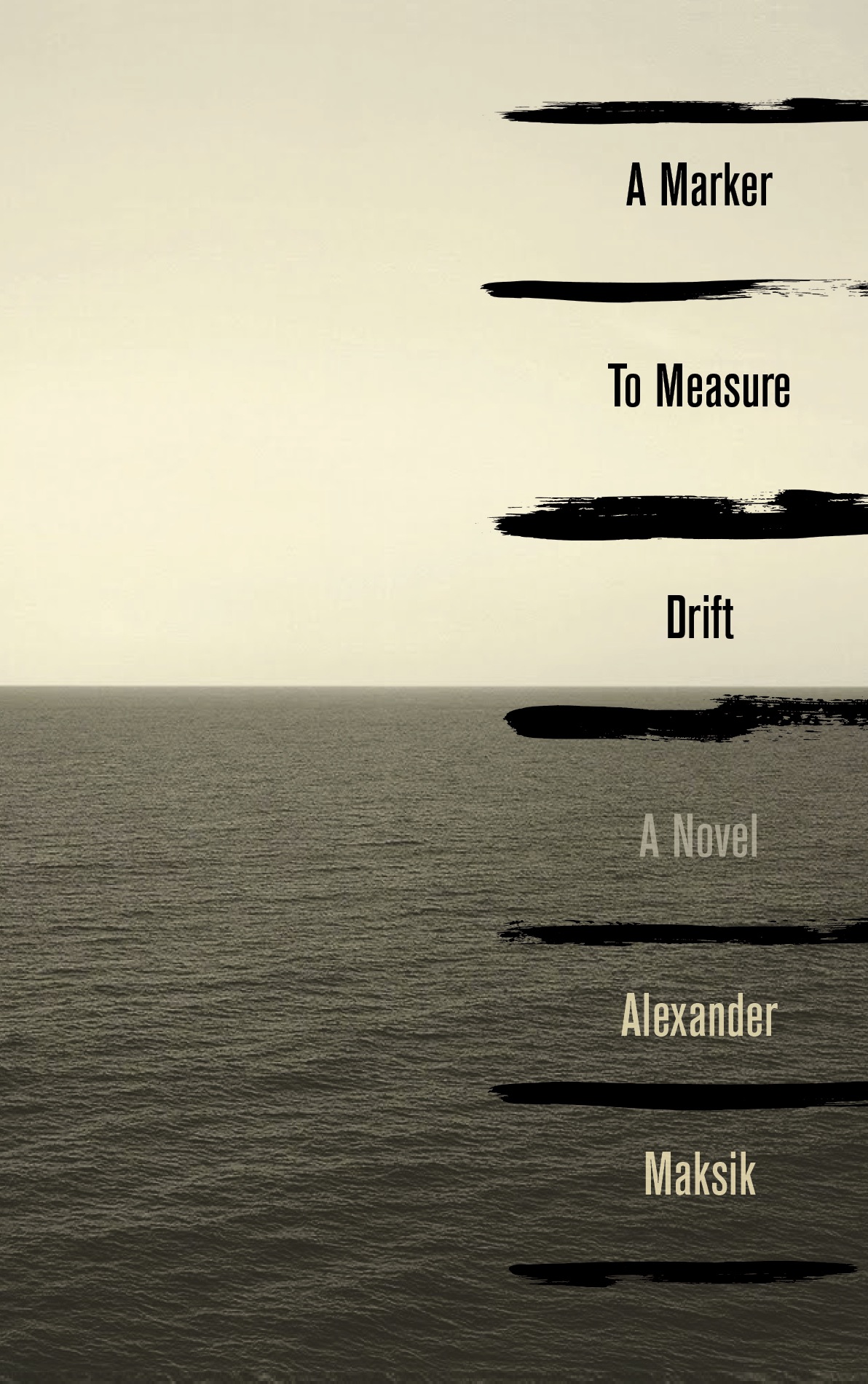
A Marker to Measure Drift
A New York Times Book Review Notable Book of 2013
A New York Times Book Review Editors’ Choice
A Chicago Tribune Editor’s Choice
Finalist for the William Saroyan International Prize for Writing
Shortlisted for Le Prix du Meilleur Livre Étranger
In the aftermath of Charles Taylor’s fallen regime, a young Liberian woman named Jacqueline has fled to the Aegean island of Santorini. She lives in a cave accessible only at low tide. During the day, she offers massages to tourists, battling her hunger one or two euros at a time. Her pressing physical needs provide a deeper relief, obliterating her memories of unspeakable violence.
But slowly, the specters of her former life resurface: her adoring younger sister; her unshakably proper mother; her father, who believed in his president; her journalist lover, who knew that Taylor would be overthrown. Now Jacqueline must face the ghosts that haunt her—or tip into full-blown madness. Hypnotic in its depiction of physical and spiritual hungers, this is a novel about ruin, faith, and the devastating memories can destroy and redeem us.
Praise for A Marker to Measure Drift
“Maksik hits the mark. His writing is both stark and lyrical, subtly reflecting Jacqueline’s state of mind – wary, desolate, hallucinatory, determined. Maksik’s last ten pages, a masterclass in how to captivate and revolt a reader, may well be the most powerful I will read all year”
—Malcom Forbes, Literary Review
“Maksik has produced a bold book, and an instructive one . . .[he] has illuminated for us with force and art an all too common species of suffering – grievous, ugly and, unfortunately, a perennial.”
—Norman Rush, New York Times Book Review
“A fever dream of a novel . . . One might linger over most of this book, rereading particularly beautiful passages. Yet the ending is so compelling and visceral that one rushes until the fever breaks, dazed and haunted by its power.”
—Chicago Tribune, Editor’s Choice
“Poetic . . . faultlessly lyrical . . . A Marker to Measure Drift is about compassion; perhaps it’s even a masterclass in compassion . . . Maksik does not take sides or make judgments. He is simply aware that his job as a novelist is to talk to us about something that we ought to know . . . And to move us deeply in the process.”
—Sydney Morning Herald
“Maksik emerges with something stark and essential. . . No doubt he still faces obstacles in his work, missteps and uncertainty from day to day. A book in print doesn’t cure all ills. With A Marker to Measure Drift, though, Alexander Maksik’s deep belief proves warranted: he has succeeded.”
—The Millions
“Haunting and sensual, Maksik’s prose deftly intertwines the tenderness and torment of memory with the hard reality of searching for sustenance and shelter.”
—Harper’s
“Beautiful . . . It will leave you breathless and speechless; it will send you reeling.”
—San Francisco Chronicle
“Immensely powerful . . . Beautifully written . . . Jacqueline is a mesmerizing heroine . . . She is alive on the page from the outset, and with each paragraph she deepens, grows more complicated. Maksik brings Jacqueline’s tale to a devastating finale . . . giving her quest an awful and moving dignity.”
—Boston Globe
“Luminous . . . Maksik is both deft and lyrical, a master of tense—his shifts from past to present and back again are nearly invisible, so appropriate do they feel—and a sensualist, and it is impossible to read Marker with less than total attention . . . Maksik’s brilliance is evident in his ability to keep the novel’s stripped-down cast and plot so riveting.”
—Winnipeg Free Press
“No novel I read this year affected me more powerfully than Alexander Maksik’s A Marker to Measure Drift.”
—Richard Russo
“A masterpiece . . . Maksik manages to accomplish in Marker something next to no one has managed to do, namely, to strip the world down to naked life, life in all its glory and all its agony and terror, and death . . . Maksik’s prose floats weightlessly and then falls like a fist on the table.”
—Jennifer Croft, Buenos Aires Review
“I was so caught up in the masterfully taut and suspenseful story of this haunted and desperate young woman that it was only after I’d turned the last page that I was able to stop and consider the truly breathtaking accomplishment of this novel. How did Alexander Maksik immerse himself so convincingly in a world so entirely unlike his own, and in a character so entirely different from himself? It is work of stupendous imagination, like Dave Eggers’ What is the What, or (dare I say?) like Mark Twain’s Huckleberry Finn.”
—Ayelet Waldman
“Moving, painful and beautiful. It will change you.”
—Booklist
“A moving, deeply felt and lyrical novel.”
—Kirkus (starred review)
Shelter in Place
A Guardian Best Book of 2016
A San Francisco Chronicle Best Book of 2016
Un Revue America Meilleur Livre de l’Année
Set in the Pacific Northwest in the jittery, jacked-up early 1990s, Shelter in Place, by one of America’s most thrillingly defiant contemporary authors, is a stylish literary novel about the hereditary nature of mental illness, the fleeting intensity of youth, the obligations of family, and the dramatic consequences of love.
Joseph March, a twenty-one-year-old working class kid from Seattle, has just graduated from college and his future beckons, unencumbered, limitless, magnificent. Joe’s life implodes when he starts to suffer the symptoms of bipolar disorder, and, not long after, his mother, Anne-Marie March, beats a stranger to death with a hammer.
Joe moves to White Pine, Washington, where Anne-Marie is serving time and his father has set up house. He is followed by Tess Wolff, a fiercely independent woman with whom he is in love. Meanwhile, Joe’s mother is gradually being transformed into a national heroine. Many see her crime as a furious, exasperated act of righteous rebellion. Tess, too, is under her spell. Spurred on by Anne-Marie’s example, she enlists Joe in a secret, violent plan that will forever change their lives.
Praise for Shelter in Place
“There’s something truly exhilarating about reading a novel that’s so audaciously original, so inventive and let’s be honest, so sort of weird that you want to put it in the hands of just about everyone you know. And that’s a perfect description of Alexander Maksik’s stunningly unsettling third novel, Shelter in Place.”
—San Francisco Chronicle
“Alexander Maksik’s riveting and disturbing novel Shelter in Place is a totally original exploration of mental illness, sexual politics, family and violence.”
—Guardian
Maksik perfectly captures the weight of mental illness, the ache of longing and uncertainty, and the complexity of human relationships. Highly recommended.
—Library Journal
“Alexander Maksik covers fresh ground with each new work. In poetic bursts…he captures [his characters’] inner convulsions while exploring the passions that can drive, and destroy, us.”
—Vanity Fair
“Impressive . . . A novel of considerable power.”
—Times Literary Supplement
“Sensual, musical . . . Shelter in Place is as unquestionably brilliant as it is painful; a rare meditation on mania, depression, and the rage of youth.”
—Huffington Post
“[A] striking narrative. . . Maksik’s Joe March is a man for today as much as Ishmael and Stephen were for Melville’s and Joyce’s days.”
—Shelf Awareness
“An incredibly courageous novel that delves deeply into issues of love, gender, violence and mental illness.”
—Publishers Weekly
“Maksik is one of the most exacting and daring writers we have . . . from the first sentence there’s no turning away from this story.”
—Literary Hub
“Intense and . . . mesmerizing.”
—Booklist
“[A] scorching third novel. Maksik [delivers] a portrait of bipolar disorder…that is honest and devastating.”
—Publishers Weekly
“Alexander Maksik is a sorcerer of the first order, and Shelter in Place is a sharp, dark, jagged music conjured out of poetry, pain and ecstatic bursts of beauty. This is a powerful book.”
—Lauren Groff
“Unsettling and honest, a remarkably insightful portrait of mental illness, Shelter in Place is elegiac, savage and mournful, a beautifully written novel about the echoes of our actions, of love and its consequences.”
—Aminatta Forna

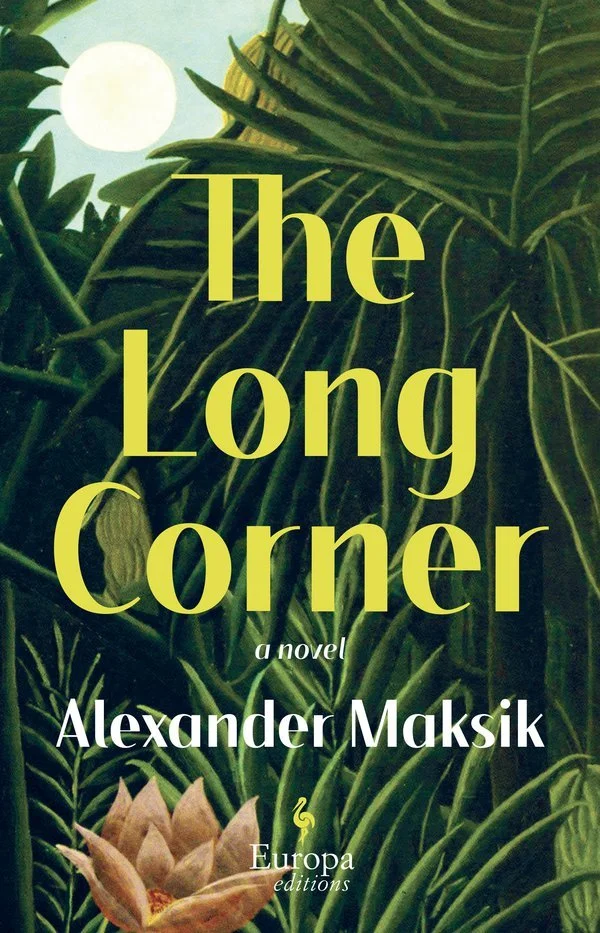
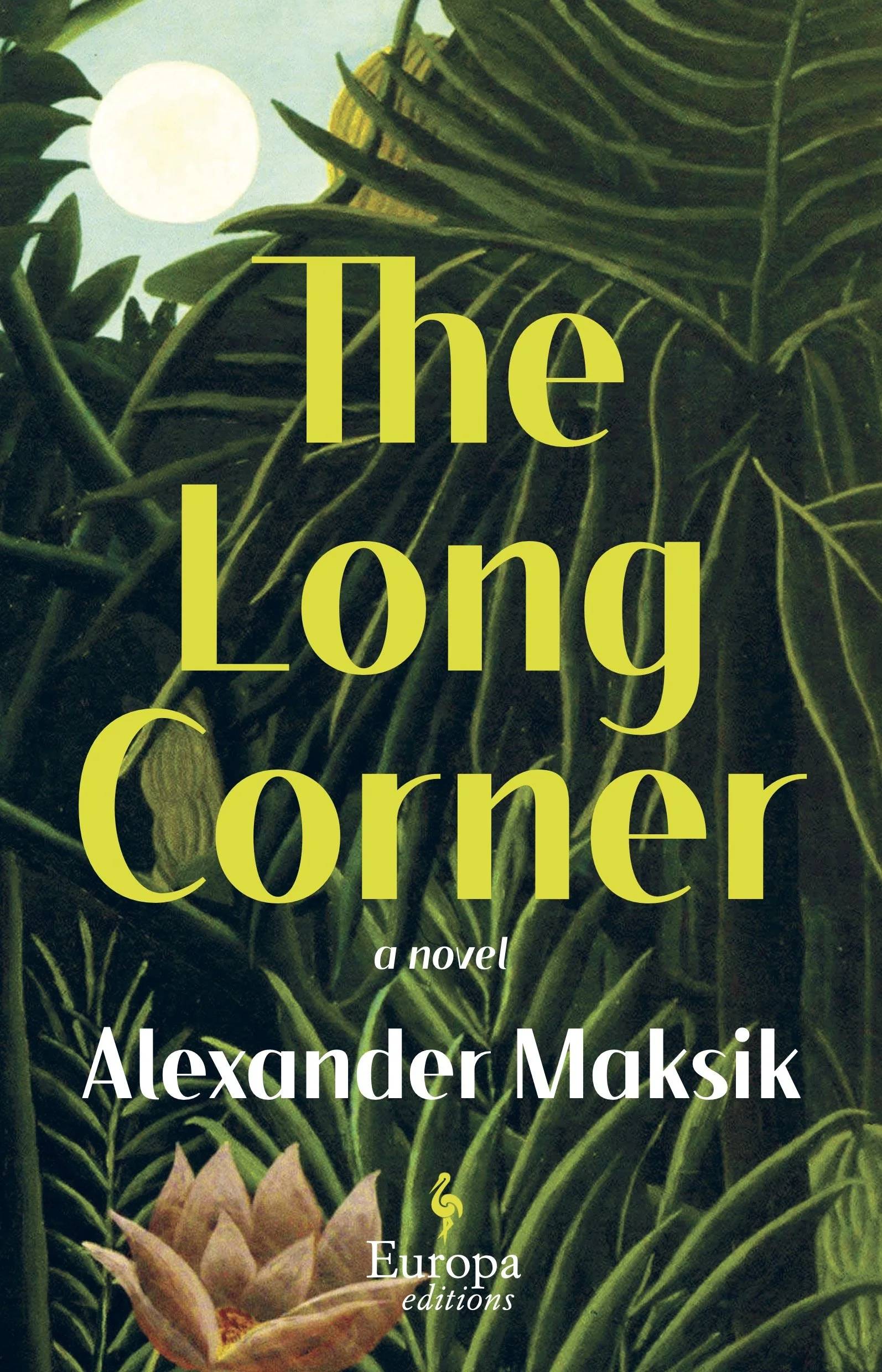
The Long Corner
A New York Times Book Review Editors’ Choice
A Best Book of the Year - The Australian
A Best Book of the Year - Artnet
A bold novel about ambition, grief, creativity, beauty, and existential emptiness that retraces the arc of American life and culture in the first decades of the 21st century.
It is 2017 in New York City and Solomon Fields, a young journalist-turned-advertising hack, finds himself disillusioned by the hollowness and conformity of American life and language. Once brimming with dreams and ideals instilled in him by his bohemian grandmother, a Holocaust survivor who has dedicated her adult life to passion and pleasure, Sol now finds the senseless jargon he produces at work seeping into all aspects of the world around him.
Loss and disenchantment drive Sol to leave New York and accept an invitation to The Coded Garden, an artists’ colony located on a tropical island, whose mysterious patron, Sebastian Light, seems to offer the very escape Sol desperately needs. But the longer he remains in the Garden, the more Sebastian Light comes to seem the very embodiment of his age’s worst impulses. Slowly lines begin to blur—between reality and performance, sincerity and manipulation, art and life, beauty and emptiness—until Sol finds that he must question everything: his past, his convictions, and his very sanity.
Praise for The Long Corner
“Eerie and moving…compelling…finally an argument for the necessity of irony, risk and integrity in the production of art as in life.”
—New York Times Book Review
“[A]n enigmatic literary top that continues to spin after the last page…a triumph of sophisticated art.”
—The Forward
”Alexander Maksik is one of the most talented and versatile novelists of his generation…If the thought of Trump 2024 gives you pause, the best novel about Trumpism has already been written…The Long Corner, set largely in a writers’ colony on a tropical island, is a grim fable about the ways power can co-opt culture and even warp our sense of reality.”
—The Australian
”The Long Corner is a riveting read by an abundantly talented writer and storyteller.”
—Los Angeles Review of Books
“The novel is at turns comical, insightful, and unsettling, skewering the snobbery and cultishness of the art world while reconsidering the value of so-called creative genius—and the power of those who claim to foster it.”
—Artnet
”[Maksik] keeps readers guessing…it could be anything from an extravagant summer camp to the Island of Dr. Moreau; there are moments when it could easily turn into Jonestown, or The Blair Witch Project, or Fantasy Island, or simply a kibbutz. This ambiguity makes the narrative particularly compelling; it’s a hard book to put down.”
—Jewish Book Council
”Alexander Maksik, an inveterate stylist of the first order, is forever walking a line between cynicism and hope, all of it playing out at the level of language, his consistent preoccupation…it’s the pitch perfect movement of his sentences that distinguishes The Long Corner, just as they did in earlier novels…Maksik does the slow, difficult work of creating atmosphere with a style all his own, conjuring up a world that’s simultaneously obsessed with beauty and unerringly suspicious of all things beautiful. It’s that balance between the cynical and the hopeful. The stylist and the true believer.”
—Literary Hub
”[A] scathing satire…readers will revel in the riotous upending of a self-absorbed personality.”
—Publishers Weekly
“The Long Corner may be the world’s weirdest page-turner. The narrator’s incandescent intimacy with his grandmother, his preposterous encounters with artists (and “artists,” and money,) and the bleakness of his Late Capitalist Manhattan existence unspool in Maksik’s seductive novel—as propulsive as it is surreal.”
—Ariel Levy
“Masterful. Rarely does a novel so perfectly and delightfully encapsulate the madness of the time in which it is written.”
—Elliot Ackerman
“The Long Corner is a sharp, witty and utterly engrossing novel about culture, kitsch, cynicism, and all the ways we corrupt what is most important to us. I laughed out loud, I couldn’t get enough of the characters, and I couldn’t put it down.”
—Phil Klay
”Both touching and comedic…even when it is hilarious, the stakes are significant: The Long Corner confronts the orthodoxy of authenticity as it dismantles questions about the creative act.”
—Matthew Barney
”Maksik updates Fowles’ The Magus for the era of wellness, wealth and cultural impoverishment — a strange and haunting fable.”
—Ayad Akhtar
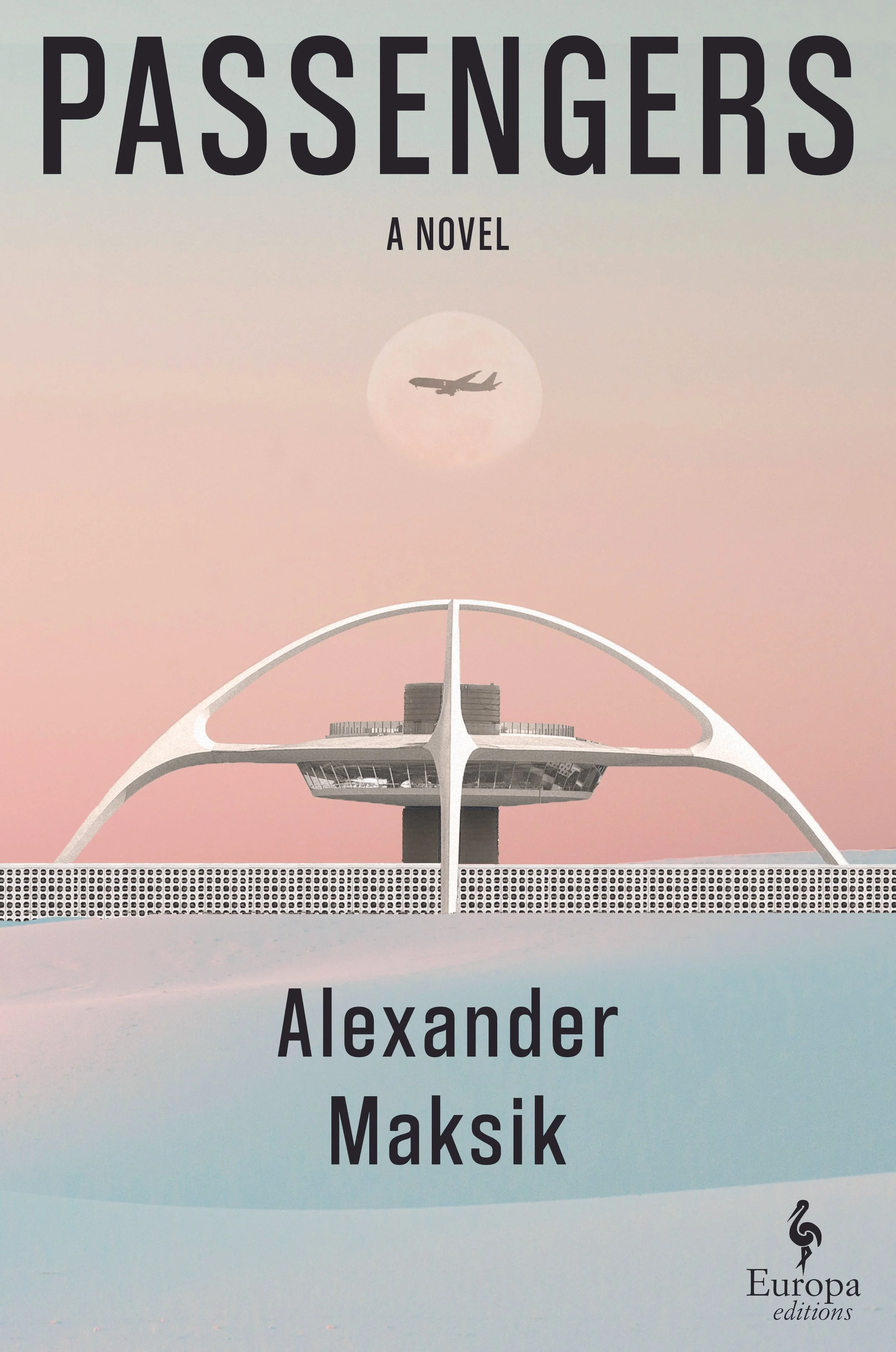
Passengers
October 13, 2026
Ivan is a solitary man in his seventies, set in his ways and haunted by the failures of his past. His smart and cynical daughter, Nina, is in the twilight of her twenties and has long kept a distance from her sentimental father. But when Ivan proposes a trip to Europe in hopes that it will bring them closer together, Nina reluctantly agrees.
They meet at LAX, where their departure is delayed. And delayed again. And again. As the hours drag on, their sharp, caustic and wide-ranging conversation reveals a lifetime of misunderstandings, unhealed wounds, and stubborn love.
Soon more flights are canceled, security tightens, airport staff grow evasive, and it becomes clear to Ivan and Nina that something is wrong. They begin to suspect that they’re being held prisoner—sequestered from the world without explanation. At last, the surreal starts to overtake the mundane, and their need to escape—and to protect each other—turns increasingly urgent.
What begins as a piercing portrait of a father and daughter becomes a novel of eerie suspense, as Nina and Ivan navigate not only their fractured bond but also a world teetering on the brink of collapse. A story of loving across gaps—between parent and child, between things said and unsaid—and about what happens when the outside world finally mirrors the chaos within.
Praise for Passengers
“This is among the most moving portraits of parenthood I’ve ever read, one on par, in its cumulative emotional power, with Cormac McCarthy’s The Road. It also happens to be exceptionally funny, propulsive, and wise, an example of the alchemy that occurs when a novelist finds the work he was born to pursue. Passengers is Alexander Maksik’s masterpiece. It is a novel of surpassing beauty. I cannot recommend it highly enough.”
—Anthony Marra
“A beautiful, unsettling novel about the depths of love, the burden of nostalgia, and the maddening impossibility of translating feeling into language.”
—Imbolo Mbue
“Passengers is a tour de force that shows just how deeply two ordinary people can love one another…this superb novel takes on the very hardest stuff of life and never looks away.”
—Ben Fountain
“Maksik’s latest, Passengers, is propulsive and fierce and uncompromising in its humanity. And funny too, in often unexpected ways. Also, my kind of book in that it doesn’t waste a single word. It's kept me intensely good company these past few weeks. Seems to me: A necessary book for these batshit times.”
—Peter Orner
“Alexander Maksik's novel Passengers is his best to date. On its face it's a tale about an elderly father and adult daughter stuck in an airport, during what may or may not be a mysterious world-historical event. What it's really about is how we are all trying to get somewhere different, somewhere better--to a place where we can be closer to those we love the most, during this one precious life we have. I could not put it down.”
—Adam Ross
“Alexander Maksik is one of the few writers I am always deeply, profoundly inspired by; I wait for his books with hands pressed against the window. With Passengers, Maksik has outdone himself. It’s a book you clutch, the way you want to clutch this family and tell them of the dread approaching from the horizon, of a world that is about to forever alter. This is the stuff we live for—a spinning dream of a book, full of so much love even in all the despair, a book that is pure heart-in-your-throat magic. I can’t say this enough: read this, today, now.”
—Paul Yoon